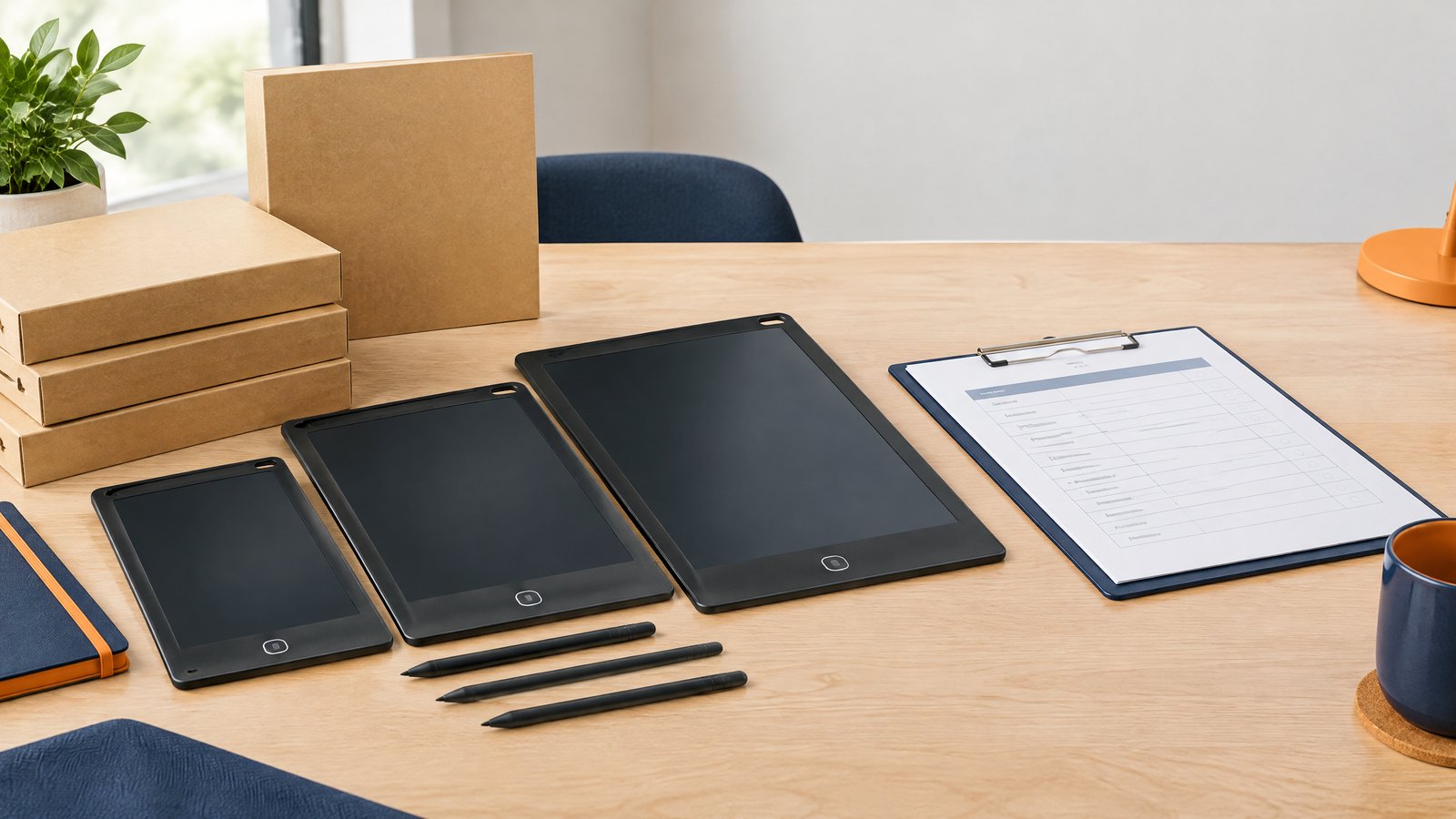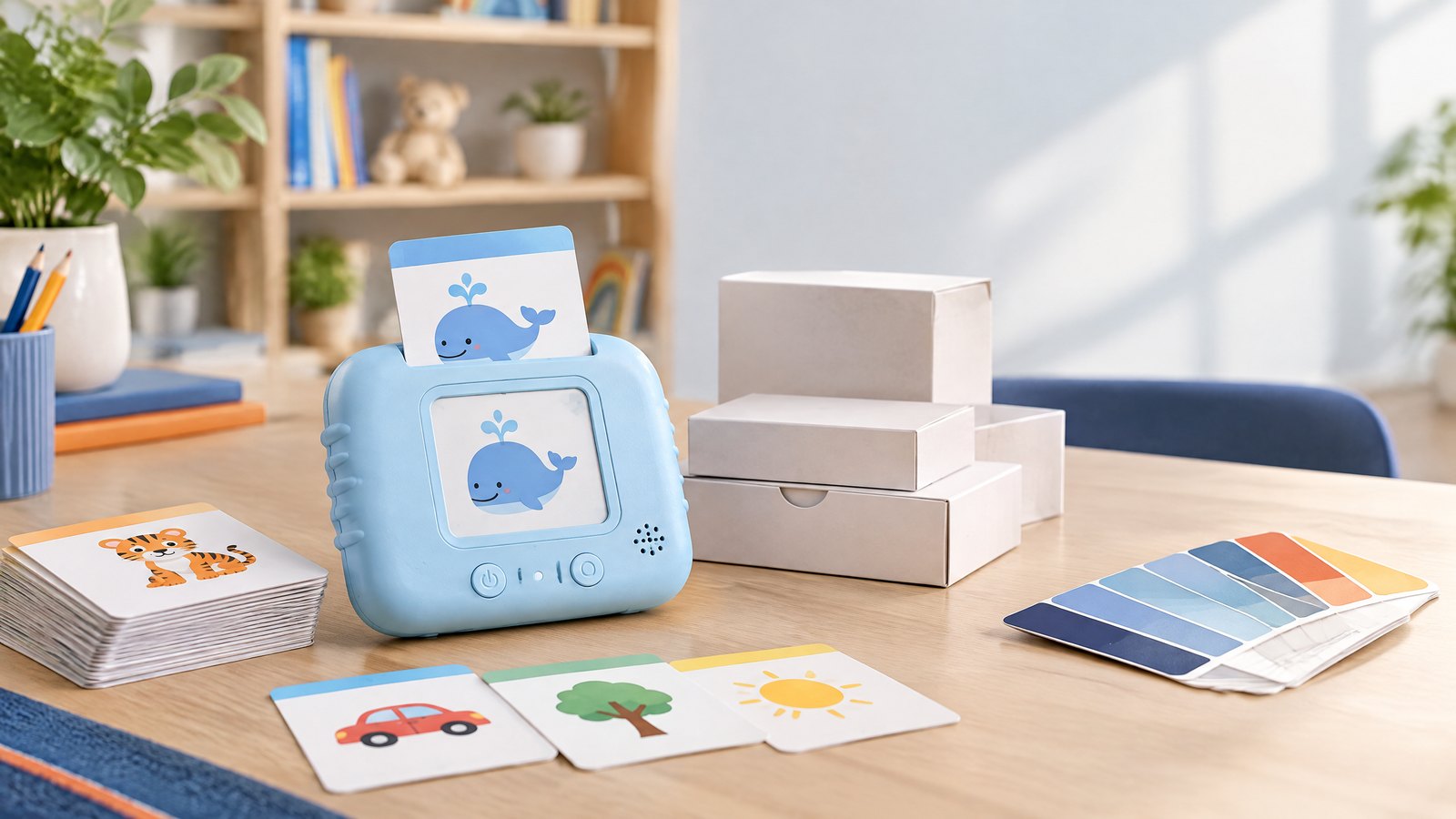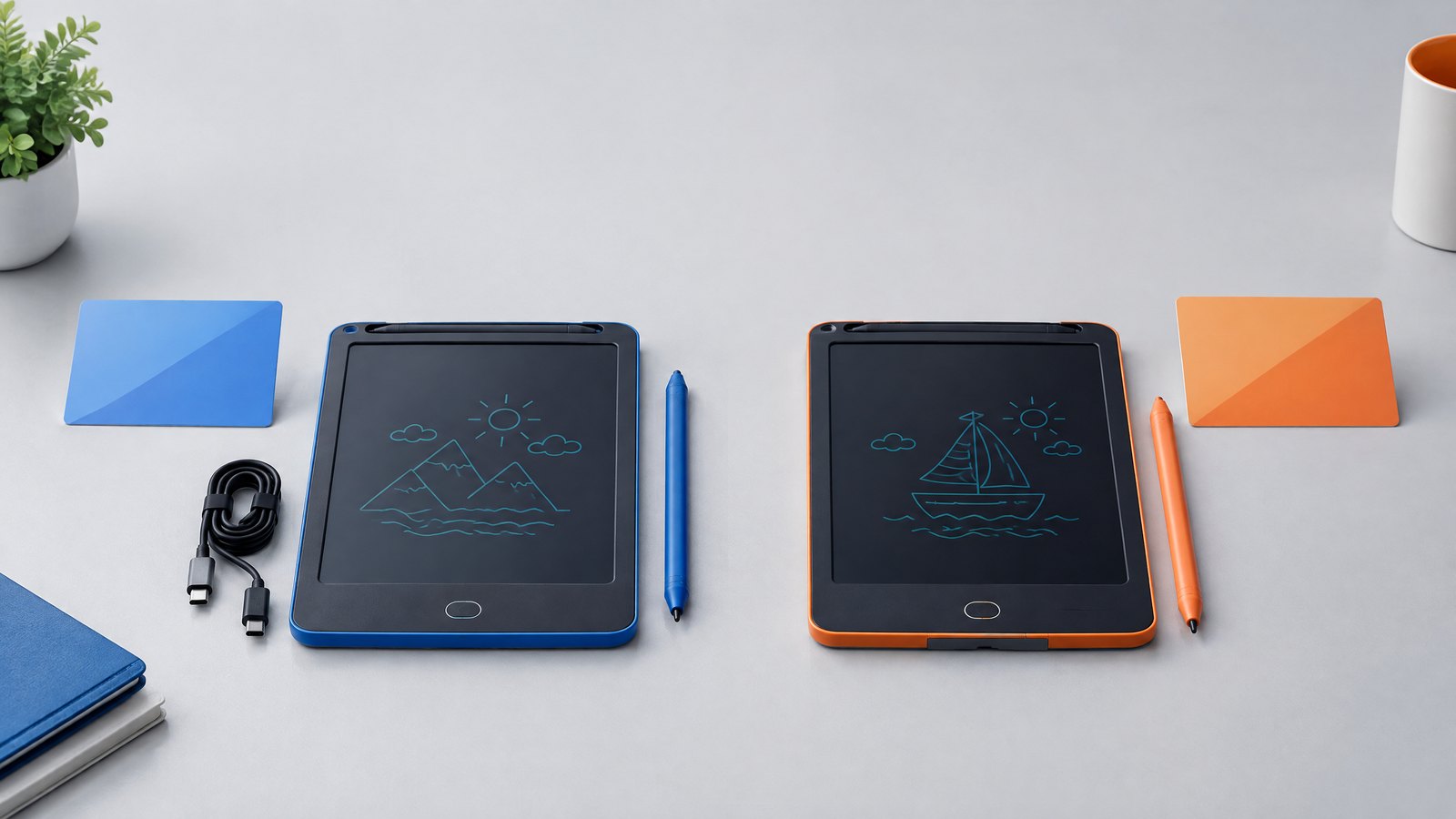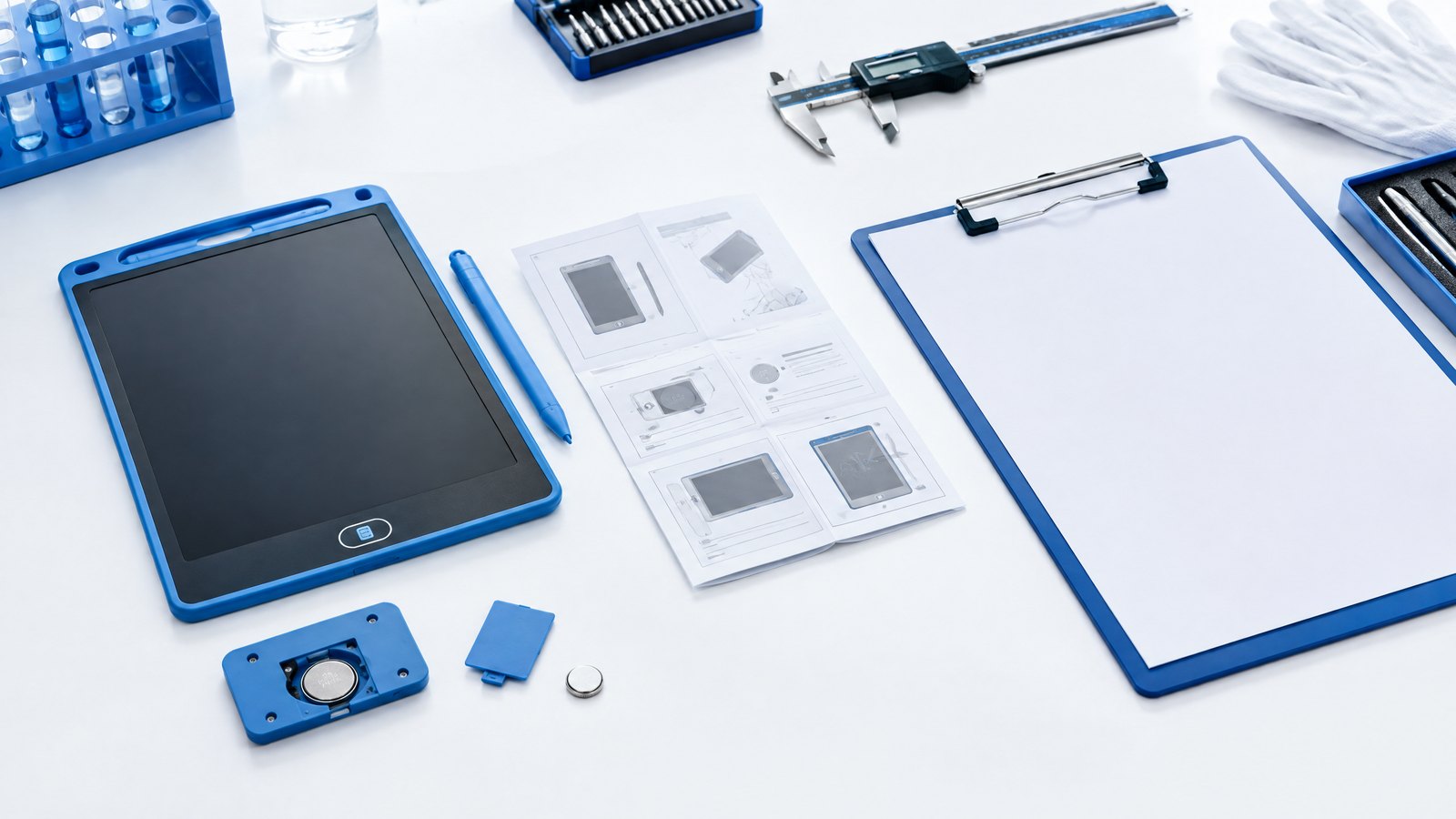
This guide provides a practical B2B decision framework. Final specifications, market obligations, testing scope, labels, packaging and shipment requirements must be confirmed for the exact finished SKU and destination.
Module 1 — SEO metadata
| Field | Publication metadata |
|---|---|
| SEO title | What Safety and Compliance Documents Do LCD Writing Tablets Need for the US and EU? |
| Primary keyword | LCD writing tablet safety compliance CPC EN71 Reese Law |
| Slug | lcd-writing-tablet-safety-compliance-us-eu |
| Meta description | US and EU compliance guide for LCD writing tablets: CPC, ASTM F963, Reese’s Law, CE, EN 71, RoHS, WEEE, labels, testing, shipment records, and documents. |
| Excerpt | Learn which safety, testing, labeling, certification, technical-file, and shipment documents an LCD writing tablet buyer should plan for before selling in the United States or European Union. |
| Read time | 14 min read |
Module 2 — Direct answer: start with the final product, not a generic certificate
An LCD writing tablet needs a product-specific compliance file, not one universal certificate. In the United States, a child-directed tablet may need third-party test reports and a Children’s Product Certificate (CPC); a toy may trigger ASTM F963, while a button or coin cell can trigger Reese’s Law requirements. In the EU, the same product can require a CE-backed EU Declaration of Conformity, technical documentation, safety risk assessment, RoHS evidence, and producer-responsibility preparation for electronics, batteries, or packaging. Wireless functions, a charger, the target age, battery type, claims, and the responsible economic operator can change the answer.1 2 3
The practical question is not, “Does the factory have CE or CPC?” It is, “Which rules apply to my final SKU, and which documents prove that the manufactured, branded, packed, and shipped version meets them?” A report for a similar tablet does not automatically cover a private-label version with a different plastic, battery door, stylus, magnet, radio module, charger, carton, or age grade.
This buyer guide covers ordinary LCD writing boards and variants with talking functions, replaceable cells, rechargeable batteries, adapters, or wireless connectivity. It is operational planning guidance, not legal advice. Final obligations depend on the precise product, intended use and age, destination country, sales channel, and responsible economic operator.
Product classification should precede testing. CPSC guidance explains that a product is assessed as a children’s product when it is designed or intended primarily for children aged 12 or below; design, age grading, marketing, play value, retail placement, and likely appeal can matter.12 A plain office memo board can therefore follow a different US path from an animal-shaped “ages 3+” learning toy, even where some hardware is similar.
Module 3 — Who this buyer guide is for
This guide is for brand owners, importers, distributors, education suppliers, promotional-product businesses, and marketplace sellers buying LCD writing tablets, talking flashcard learning machines, or smart electronic badges from an OEM/ODM manufacturer. It is especially useful when a standard item is customized with a logo, new artwork, different housing color, a rechargeable pack, a separate battery, a speaker, a radio module, or different packaging.
Four recurring situations create the most uncertainty. First, a buyer must distinguish a children’s product, a toy, and a general-use product. In the United States, a toy is an object designed, manufactured, or marketed as a plaything for children under 14, while CPSC third-party-testing and CPC duties generally concern children’s products primarily intended for those 12 or younger.2 Second, a product family may contain materially different variants: a replaceable CR2032 version, a sealed lithium-polymer version, and a USB-rechargeable version should not be assumed to share documents.
Third, a buyer that sells under its own brand in the EU may be the manufacturer for regulatory purposes. The European Commission states that a company that has a product made and markets it under its own name or brand is responsible for compliance of the entire product, including supplied components.6 Fourth, online EU sales require an early plan for the responsible person, product identification, warnings, language, and listing information. These requirements should be built into product and artwork approval rather than treated as a last-minute marketplace upload.
A reliable division of work is simple. The supplier provides the agreed BOM, samples, factory evidence, and agreed test coordination. The buyer or its compliance lead determines markets, claims, importer/manufacturer roles, and final artwork; approves the compliance scope; and keeps the final dossier. Where classification or scope is unclear, use a qualified laboratory, EU responsible person, customs adviser, or product-safety counsel.
Module 4 — Buyer decision framework: classify before you test
Use five questions before requesting a quotation, test, or certificate. The goal is to turn a commercial brief into a stable compliance scope.
1. What is the exact final product? Record the model, screen size, housing resin, coating, stylus and lanyard, screws, magnets, speaker, printed overlays, battery chemistry and capacity, battery access, charging port, adapter, radio module, firmware, carton, inner pack, and instructions. Add every option to a configuration matrix. If variants differ in a safety-relevant component or function, keep them separate until a laboratory gives a written grouping rationale.
2. Who will use it and how will it be presented? State the intended age, whether it is a plaything, and all product-page, carton, manual, and advertising claims. “Learning toy,” preschool imagery, characters, or play challenges may support a children’s-product or toy assessment. An unsupported “14+” sticker does not change a child-directed design. Marketing, age grade, and foreseeable use should be consistent.
3. Which functions add a pathway? A basic non-connected board with no charger has a narrower map than a talking learning machine. Trigger a focused review for a button/coin cell, accessible battery, rechargeable lithium battery, adapter, speaker, Bluetooth, Wi-Fi, NFC, magnet, detachable part, strap, or cord. For US equipment, the FCC says intentional radiators generally require Certification; equipment with only digital circuitry is generally subject to SDoC. In the EU, RED covers radio equipment’s safety, electromagnetic compatibility, and efficient spectrum use.5 15
4. Where and by whom will it be placed on the market? Do not use a generic global logo sheet. For US imports, identify the domestic manufacturer or importer that issues a CPC or GCC when required. CPSC says children’s products subject to applicable CPSC rules require third-party testing and a CPC, while certain regulated general-use products use a GCC route.1 12 For the EU, identify the legal manufacturer, importer, and responsible economic operator. GPSR Article 16 requires a Union-established responsible economic operator for covered products, and its contact details must be shown on the product, packaging, parcel, or accompanying document.7
5. What proof will survive a retailer or authority review? Build the file around the final production version: BOM, artwork, component declarations, risk assessment, test reports, certificates or declarations, inspection records, and traceability data. EU technical documentation should map rules and standards to risks, critical materials, labels, instructions, and reports. It must be prepared before placing the product on the market and is normally retained for 10 years.14
The output is a short compliance applicability matrix approved before testing, carton printing, or mass production. It should name what is in scope, who owns it, and what change forces reassessment. Typical triggers are a new resin, pigment, PCB, battery, cell holder, charger, radio module, firmware, age grade, warning, country, or factory.
Module 5 — Comparison and specification table: common tablet configurations
This planning table is not a statement that every listed record is legally required. It explains why the product’s final configuration and presentation must be confirmed first.
| Configuration and presentation | US questions and evidence to review | EU questions and evidence to review | Critical buyer note |
|---|---|---|---|
| Basic LCD writing tablet, general-use, no radio or supplied charger | Is the general-use classification supportable? Identify any CPSC rule actually triggered and evidence for it. A GCC is relevant only when a CPSC-enforced rule applies. | Assess GPSR safety evidence and whether it is EEE; review RoHS and national WEEE/packaging obligations where applicable. | “No battery” does not remove product-safety work. Review stylus retention, breakage, edges, magnets, and foreseeable use. |
| Child-directed learning tablet, not necessarily a plaything | Is it intended primarily for ≤12? If an applicable CPSC rule applies, obtain CPSC-accepted-lab reports and a CPC; assess lead, phthalates, small parts, and tracking labels as applicable. | Determine whether it is a toy or another child product. If a toy, complete the CE route and relevant EN standards; assess RoHS if it is EEE. | A children’s product and a toy are not the same classification. |
| Toy writing board or talking flashcard plaything | Determine applicable ASTM F963 provisions under 16 CFR part 1250 and other CPSC rules; CPC and third-party testing are commonly central. | Toy Safety Directive safety assessment, CE marking, EU DoC, and relevant EN 71/electrical-toy assessments. | Battery-operated toy marking and instruction requirements deserve an artwork check.2 |
| Replaceable button/coin-cell tablet or badge | Determine 16 CFR part 1263/ANSI/UL 4200A-2023 applicability; review compartment security, access after testing, warnings, and CPC or GCC as applicable. | Assess toy/child-product pathways, battery regulation, safety evidence, labels, and national collection duties. | A screwdriver door alone does not establish compliance; accessibility and warnings also matter.3 |
| Rechargeable lithium tablet with USB cable or adapter | Review product safety, any applicable FCC path, and lithium transport evidence such as UN 38.3 documentation when applicable. Identify the adapter separately. | Assess RoHS, WEEE, Batteries Regulation, applicable CE legislation, and EMC; radio changes the route. | Test and label the tablet and adapter as supplied, without assuming one report covers both. |
| Bluetooth/Wi-Fi smart badge or learning device | Identify RF functions; FCC Certification is generally required for intentional radiators. Preserve the approved radio configuration and labels. | RED assessment, CE/DoC, technical documentation, and any relevant software or data-protection review. | A radio-module, antenna, or firmware change can affect the basis of prior evidence. |
Mid-article CTA: Need a product-specific document request list for a standard or customized LCD writing tablet, talking flashcard machine, or smart electronic badge? Send the product brief, target markets, age grade, battery details, connectivity, and artwork status to info@lcdwritingtablet.com. A focused review can begin with the configuration matrix rather than a vague request for “all certificates.”
Module 6 — Buyer checklist: build a document packet that maps to the SKU
Organize the packet by model and market, with a revision date and approver. Do not file a report under a broad product family unless a written record explains why it covers the final version.
| Packet section | What to collect or create | Purpose |
|---|---|---|
| Product identity | Approved specification, BOM, drawings, component list, firmware version, product photos, SKU cross-reference, change log | Connects declarations and reports to the product actually sold. |
| Risk and classification | Intended age/use statement, toy or children’s-product assessment, hazard analysis, applicable-law/standard matrix, exclusions rationale | Prevents a test plan based only on a generic product name. |
| US evidence | Required CPSC-accepted-lab reports, CPC or GCC, FCC SDoC/Certification records where applicable, tracking-label artwork, warnings, manual | CPSC specifies the content of a CPC, including product, rules, certifier, testing data, and laboratory identification.1 |
| EU evidence | Technical file, risk assessment, EU DoC, reports, standards list, CE artwork, labels, instructions, responsible-person details | Demonstrates how design, risks, standards, materials, labels, and reports support compliance.14 |
| Environmental/EPR | RoHS material declarations or evidence; WEEE, battery, packaging registration and recycling plan by destination; required marks/reporting | RoHS, WEEE, battery, and packaging duties are separate workstreams and can differ by Member State.8 10 11 |
| Logistics/quality | Battery transport records where applicable, pack specification, carton marks, shipment photos, inspection reports, corrective actions | Confirms the approved product and artwork survived production and shipment. |
For US children’s products, treat the CPC as a declaration built on evidence, not as a laboratory’s generic certificate. CPSC says the domestic manufacturer or importer certifies compliance based on testing by a CPSC-accepted third-party laboratory where required. The CPC and supporting reports must be in English, and the CPC has seven required elements.1 The responsible US entity should verify that it covers the final model, not merely attach a laboratory cover page.
Also include a US tracking-label artwork review for children’s products. CPSC says permanent, visible, legible distinguishing marks should be on the product and packaging, to the extent practicable, and should make manufacturer/importer or private-label identity, production location/date, batch/run, and source information ascertainable. Tracking labels are not a CPC line item, but they are central to traceability.16
For a US button/coin-cell product, keep a Reese’s Law subfolder. CPSC guidance on 16 CFR part 1263 incorporates ANSI/UL 4200A-2023 for in-scope products and describes secure compartments, access after use-and-abuse testing, and warnings for the package, product where practicable, and instructions.3 The pathway differs for general-use and children’s products. A toy that complies with ASTM F963 battery-accessibility and labeling provisions warrants a scope analysis rather than automatic duplication of testing.
For EU sales, do not substitute a stand-alone “CE certificate” for conformity work. The Commission explains that there is no central EU permission document for CE. The manufacturer identifies applicable rules, gathers evidence, performs the correct conformity assessment, signs an EU DoC, and affixes CE where required.6 A voluntary certificate may have commercial value, but it does not replace the technical file, risk assessment, DoC, labels, or economic-operator obligations.
Module 7 — Sample, testing, factory, and shipment inspection workflow
1. Review a compliance-ready sample. Before laboratory submission, freeze the candidate BOM and compare the physical sample with drawings and the marketing brief. Photograph the front, rear, battery door, screw type, ports, stylus, lanyard, speaker holes, labels, carton, inner packaging, instructions, and charger if included. Check that age grade and claims match the design. Record uncertainties before test samples are chosen, such as a detachable magnetic stylus or a changed battery tray.
2. Confirm the test plan. Provide the laboratory with intended age/use, target markets, all variants, BOM, battery chemistry and access, radio functions, accessories, and artwork. Ask it to identify sample quantity, configuration grouping, destructive-test needs, and whether a CPSC-accepted laboratory is required. A report should identify the tested model/revision, samples, standard/version, dates, results, and limitations. Compare it to the approved sample; do not rely only on a pass/fail statement.
3. Lock artwork and documents. After the safety content is confirmed, review CE placement where applicable, US tracking data where required, warnings, manufacturer/importer details, EU responsible-person details, product identifier, age grade, disposal marks, and instructions. EU guidance requires CE to be visible, legible, and indelible, normally at least 5 mm high unless a product rule provides otherwise.6 For EU online offers, GPSR requires clear, visible manufacturer identification and postal/electronic contact information, with additional information where applicable.7
4. Verify the first production output. Compare the initial production pieces with the tested sample and BOM. Check component part numbers, resin/pigment references, PCB revision, battery/cell holder, screws, cable, radio module, firmware, labels, carton version, and warnings. If a change could affect a test result, declaration, traceability, or consumer information, stop and obtain a documented technical review before shipment.
5. Inspect before shipment. Inspect an agreed sample size and record the lot, date code, carton count, and conditions. Check writing/erase function, screen damage, edges, loose parts, battery compartment, switch operation, sound where present, charge behavior where included, labels, warning legibility, quantity, packaging integrity, and carton marks. Retain photographs and corrective actions. Inspection does not replace mandatory laboratory testing, but it can catch production drift and artwork mistakes.
6. Release and archive. Release only when inspection issues are closed and certificates/declarations match the product. Retain a reference sample and final SKU packet. EU technical documentation should remain available for market-surveillance authorities for the relevant retention period; GPSR and EU CE guidance commonly specify 10 years.6 7 In the US, keep the CPC/GCC and supporting records accessible to the responsible entity, and check current CPSC import certificate-data rules before entry.1
Module 8 — Ordering and implementation preparation
Write compliance controls into the purchase order. The controlled annex should identify the model/SKU, BOM revision, approved golden sample, destination markets, age grade, functions, battery and adapter, radio module, language versions, artwork revisions, required records, test timing, inspection standard, and change-notification process. This makes substitutions visible before they create a gap.
Assign responsibility in writing. Decide who funds and appoints testing, owns reports, drafts the CPC or DoC, maintains the EU technical file, verifies marketplace data, and completes destination-specific EPR registrations. A supplier can provide factual support, but a private-label buyer may be the EU manufacturer and needs access to the complete file.6 No company should sign a declaration it cannot support with underlying evidence.
Prepare language and environmental tasks early. EU warnings and instructions may need destination-country translations, and authorities can request relevant technical-documentation translations.14 Make one controlled artwork master rather than pasting translations after tests are complete. In parallel, assess RoHS, WEEE, battery, and packaging work. RoHS restricts ten substances in EEE within scope and subject to exemptions.8 WEEE and battery rules can create producer registration, reporting, financing, marking, and collection obligations that vary across EU countries.10 11
For rechargeable lithium products, separate transport readiness from market compliance. A product-safety result does not itself establish that a shipment has all necessary dangerous-goods packaging, marks, declarations, or carrier acceptance. Confirm UN 38.3 test-summary availability, shipping configuration, and current carrier rules with a qualified dangerous-goods provider before booking, particularly when cells, spare batteries, or adapters are packed separately.
Module 9 — Practical applications
Private-label preschool writing tablet. An animal-shaped 8.5-inch tablet is sold as a “learning toy,” ages 3+, with a tethered stylus and replaceable coin cell. Start with toy and children’s-product assessment, then map applicable CPSC toy rules, chemical and small-parts review, battery access, CPC evidence, tracking label, and US warnings. For the EU, assess toy safety/CE, relevant EN toy standards, electrical-toy issues, RoHS, battery responsibilities, and the technical file. The button/coin cell changes the US review under Reese’s Law.2 3 4
School or office memo board. A plain black board is sold to schools and adults with no child imagery, radio, or charger. Document its intended use, components, stylus retention, battery arrangement, packaging, and market roles. A general-use classification may be appropriate, but it does not eliminate all US consumer-product obligations that a particular design may trigger. In the EU, assess general product safety, EEE/RoHS scope, and WEEE/packaging obligations where applicable.8 10 12
Talking flashcard learning machine. This child-focused product has sound, a rechargeable lithium battery, USB cable, and printed cards. Review the assembled product and accessories in their intended configuration, including any small detachable card or housing feature. Control the battery and charging design, and verify any supplied mains adapter separately. For EU sales, the risk assessment may span toy, EEE, battery, and radio routes; CE is a manufacturer’s declaration across all applicable EU rules, not a single test.6 14
Smart electronic badge. A badge with Bluetooth, NFC, or Wi-Fi differs from a passive display badge. The US review must determine the FCC route for radio transmission. The EU review should assess RED, whose essential requirements cover safety/health, electromagnetic compatibility, and efficient use of spectrum.5 15 Preserve the approved radio module, antenna, power setting, firmware, and labels. An app, cloud account, or child user can introduce privacy and cybersecurity questions outside a basic hardware plan.
Module 10 — Detailed FAQ
Is a CPC the same as a test report?
No. A test report records results for stated samples and standards. A CPC is the written certification issued by the domestic manufacturer or importer for a children’s product subject to CPSC rules. It needs appropriate evidence and seven specified elements; CPSC says third-party CPSC-accepted laboratory results are required where the relevant child-product rule requires third-party testing.1
Does every LCD writing tablet need ASTM F963 in the United States?
No. ASTM F963 is the mandatory consumer product safety standard for children’s toys under 16 CFR part 1250, not every writing board.2 Decide whether the item is a toy from its design, marketing, play value, intended age, and presentation. A product can be a children’s product without being a toy.
Does a CE certificate allow EU sales?
Not alone. CE is not a central permission certificate. The manufacturer must identify applicable laws, gather evidence, use the correct conformity assessment, issue an EU DoC, and apply CE where required.6 A report or voluntary certificate can support a file, but it does not replace the technical documentation, risk assessment, labels, or role obligations.
When does Reese’s Law matter?
Review it when a consumer product contains or is designed to use a button or coin cell. CPSC says 16 CFR part 1263 incorporates ANSI/UL 4200A-2023 for relevant products and addresses compartment security, access after testing, and warnings on package, product where practicable, and instructions.3 Scope differs for general-use and children’s products, and a toy needs a specific ASTM F963 battery review.
Is RoHS enough for EU electronics compliance?
No. RoHS addresses restricted substances in EEE; it is only one part of a possible EU picture.8 A tablet may also require toy, RED, other CE, GPSR, WEEE, battery, packaging, and national assessments. Build one applicable-law matrix rather than collecting unrelated “RoHS” and “CE” papers.
Can one report cover every color, size, or OEM version?
Only if the laboratory provides a defensible grouping rationale. A changed pigment, resin, coating, case, cell holder, radio module, accessory, charger, pack, age grade, or warning can affect evidence. Maintain a version-control table that identifies exactly which final variants each report covers.
Who is the EU responsible person, and where are their details shown?
GPSR Article 16 requires a Union-established responsible economic operator for covered products. Their name or registered trade name/mark and postal and electronic contact details must appear on the product, packaging, parcel, or accompanying document.7 Confirm the correct role and placement for the exact route to market.
Do EU online listings need compliance information?
Plan them as part of the launch. GPSR Article 19 requires distance-sale offers to clearly and visibly show manufacturer identification and postal/electronic contact information, with further listed information where applicable.7 Align listing data with the package, DoC, and responsible-person record before publication.
What change control is needed after the first order?
Use a written no-change rule. Require advance notice and documented buyer approval before changes to materials, battery, charger, radio, firmware, supplier, factory, label, instruction, carton, or age grade. Reassess the risk analysis, test reports, CPC/GCC, DoC, transport records, and marketplace file, then archive the decision with the SKU packet.
Module 11 — Conclusion: make compliance a controlled release process
The correct US and EU document set for an LCD writing tablet starts with a rigorous product definition. Age grade and play value affect US children’s-product and toy pathways. Button/coin cells can introduce Reese’s Law work. Radios can create FCC and RED routes. In the EU, CE evidence, the DoC, technical documentation, RoHS, and producer-responsibility planning must connect to the final BOM, artwork, factory output, and market role.
Treat compliance as a release gate, not a certificate search at the end of the order. Freeze the configuration, determine markets and economic operators, approve the applicability matrix, test the representative version, approve labels/instructions, inspect production, and archive the SKU file. When there is a material change, repeat the technical review before shipment.
Final CTA: To begin a product-specific document and sample-review discussion for LCD writing tablets, talking flashcard learning machines, or smart electronic badges, email info@lcdwritingtablet.com. Include the model brief, target countries, intended age, battery/charger details, wireless functions, and planned artwork so the discussion can focus on the correct compliance path.
References
Turn this sourcing plan into a product brief.
Share your target market, product requirements, packaging preference and estimated volume for a practical OEM / ODM discussion.