This guide provides a practical B2B decision framework. Final specifications, market obligations, testing scope, labels, packaging and shipment requirements must be confirmed for the exact finished SKU and destination.
title: "How to Sell LCD Writing Tablets Online: Listing Content, Returns, and Customer Education" seo_title: "How to Sell LCD Writing Tablets Online | B2B Ecommerce Guide" meta_description: "A practical B2B buyer guide for selling LCD writing tablets online: marketplace listings, product photography, customer education, returns, QA, packaging, logistics and compliance." url_slug: "sell-lcd-writing-tablets-online" author: "Manus AI"
How to Sell LCD Writing Tablets Online: Listing Content, Returns, and Customer Education
Direct answer: To sell LCD writing tablets online successfully, source a clearly specified, reliably tested product; show exactly how it writes, locks, and erases; state what it cannot do; and make setup guidance and returns easy to use. For a private-label launch, align the Shenzhen factory, buyer, marketplace team, and fulfillment partner on the approved sample, listing facts, packaging, compliance evidence, and defect process before mass production. That is how LcdWritingTablet customers reduce preventable returns while building a credible offer for US, UK, German, and French buyers.
An LCD writing tablet is generally a reusable writing surface: pressure creates a line on the liquid-crystal display, a button clears it, and many models have a lock switch. It is not normally a backlit computer tablet, a file-storage device, a printer, or a connected learning product. That distinction is the foundation of good ecommerce content. When the product page makes it visible, the buyer knows what to expect. When it is hidden, a normal product can be returned as “not working.”
Module 1: Define the retail promise and customer
Select one primary use case before selecting a model: a quiet travel doodle pad, a children’s handwriting activity, a desktop memo board, a restaurant activity item, or a branded giveaway. A listing that simultaneously promises a preschool toy, a school learning aid, and an office device creates unclear images, claims, and pricing. It also complicates compliance positioning.
Write a one-sentence SKU promise that identifies the user, use, and important limitation. For example: “A 10-inch reusable writing board for children aged 3+ to draw during travel; it clears with one button and does not save or transmit drawings.” Use that sentence to check the title, bullets, package, instructions, reviews response, and advertising. If any asset promises a feature outside it, revise or remove the asset.
Product presentation can affect regulatory classification. In the US, CPSC says electronic devices can be children’s products when they are sized, themed, or marketed primarily to children; classification determines which product-safety rules apply. 1 Do not decide an age grade from a competitor page. Evaluate the precise design, package, intended use, and target customer, then obtain qualified advice where needed.
Decide the unit of sale early. A single tablet, a tablet with lanyard, a case bundle, and a two-pack need different product photos, carton data, return logic, and profit models. If the stylus is detachable, state whether it is retained by a slot, cord, or magnet, and define how a missing stylus will be handled. Keep a standard specification available for repeat orders; customize color, logo, or retail box only after the core product has been approved.
Module 2: Convert the OEM/ODM brief into a controlled specification
An online writing tablet supplier needs more than a reference image and target price. Give LcdWritingTablet a version-controlled request-for-quotation sheet with screen size and color, housing material and finish, dimensions, weight, stylus retention, erase and lock behavior, battery type/access, logo location, artwork files, unit pack, carton limit, and destination market. A different screen film, battery-door screw, housing thickness, or stylus mold can change the product’s function, packaging fit, test evidence, and imagery.
Ask for a versioned bill of materials and approve a “golden sample.” All customer-facing photos, videos, and measurements must use that approved configuration, not a pre-production mock-up. If a buyer has a product made and sells it under its own name or brand, EU CE-marking guidance generally treats that buyer as the manufacturer responsible for the entire product, including supplied components. Factory reports support the file; they do not transfer that responsibility. 2
Control six areas in writing: functional behavior; physical finish and dimensions; claims, age grade, warnings, and barcode copy; unit and master packaging; SKU/lot traceability; and a no-substitution rule for components, materials, artwork, or sub-suppliers. Approve samples in three steps: function and industrial design, then market-ready package artwork, then pre-shipment production against the golden sample. Compare quotations on the same MOQ, Incoterm, tooling, sample cost, test scope, pack, payment terms, and lead time. A lower unit price may exclude inspection, durable packaging, traceability, or asset work that ecommerce requires.
Module 3: Build an LCD writing tablet ecommerce listing that resolves doubt
A strong LCD writing tablet ecommerce listing follows the shopper’s questions. First identify the exact product and intended use. Then demonstrate writing, lock, and erase. Next state dimensions, contents, battery facts, limits, delivery, and returns. This hierarchy also helps search engines and AI shopping systems extract accurate answers.
Use a title that begins with product class, then differentiator and size: “LCD Writing Tablet for Kids, 10-Inch Reusable Doodle Board with Stylus, Erase Button and Screen Lock.” Only claim what the approved product and documentation support. Words such as “eye-safe,” “non-toxic,” “unbreakable,” “educational,” “eco-friendly,” and “for all ages” need a qualified basis. “Reusable” is usually a clearer and safer description than broad environmental claims.
Open the description with plain language: writing appears under pressure; the erase button clears the display; the lock can prevent an accidental clear; and the model does or does not store, print, upload, charge, or connect. State the intended age, real screen or product dimensions, and battery shipment status. Use variation-specific pictures and data for every sellable size, color, count, or accessory set. A child tablet shown with a case cannot be the hero image for a bare tablet variation.
| Listing block | What it proves | Return it helps prevent |
|---|---|---|
| Hero image and title | Exact model, size, color, and use | “Not what I ordered” |
| How-it-works frame | Write, lock, unlock, erase | “It does not work” |
| Dimensions and in-box panel | Actual scale and included parts | “Smaller than expected” |
| Limits and FAQ | No files, glow, charging, or app unless specified | “Missing feature” |
| Delivery and policy copy | Pack appearance, dispatch, return path | “Arrived late/damaged” |
For GEO/AIO readiness, use question-led headings and answer in the first sentence. For example: “Does this tablet save drawings? No. This model is an erasable LCD writing surface and does not save, upload, print, or transfer drawings.” Important limitations must be in live page text, not only embedded in an image. Keep product facts consistent across the brand site, marketplace page, A+ content, retailer feed, carton label, leaflet, and support macro. A different age, size, or battery statement in one channel is enough to create a complaint.
Use this marketplace listing LCD tablet workflow before every upload: reconcile the selected variation, its image set, dimensions, in-box contents, title, attributes, warning copy, and delivery claim against the approved SKU record. It prevents a generic parent listing from silently assigning the wrong details to a child variation.
Write the kids product page for first use
The kids writing tablet product page should show the first-use sequence: remove protective film if supplied, activate or install the specified battery if applicable, write with the supplied stylus or as instructed, check the lock setting, then erase. Place a short “Before you return it” panel beside the FAQ: “If the screen will not clear, move the lock switch to unlock and check the specified battery or battery tab.” Include only instructions that fit the approved SKU.
Separate feature from outcome. “One-button erase” is a feature. “Makes it quick to clear a page before the next travel game” is a reasonable use benefit. “Improves handwriting” is a performance claim that should not be made without appropriate substantiation. For German and French listings, use professionally reviewed market-language warnings, instructions, and limitations; an inaccurate translation can become a safety or service issue.
Module 4: Adapt the offer to channel and destination
Create one source-of-truth record and export channel-ready content from it. A direct-to-consumer site can use longer FAQs, an instruction download, bundles, and post-purchase links. A marketplace normally has defined title, bullet, image, variation, and compliance fields. A distributor needs carton dimensions, barcode hierarchy, MOQ, lead time, and a compact sales story. The facts should change format, not meaning.
For US ecommerce, base any dispatch promise on actual inventory and fulfillment capacity. The FTC’s Mail, Internet, or Telephone Order Rule requires a reasonable basis for a stated shipping time; without a clear shipment representation, merchants need a reasonable basis to ship within 30 days. A delayed order requires appropriate action, including consent to delay or prompt refund in the circumstances set out by the rule. 3 Label a pre-order as a pre-order rather than reusing an in-stock estimate.
For UK consumer sales, make the returns route visible beside the purchase action. Online customers generally have 14 days from receipt to cancel and another 14 days to return goods; separate statutory remedies apply to faulty, misdescribed, or unfit products. 4 France and Germany are EU markets. EU guidance describes a minimum two-year legal guarantee for goods that are faulty or not as advertised, although national rules may add protection. 5 Marketplace policy may add another service layer.
This guide is commercial guidance, not legal advice. A qualified adviser or relevant authority should confirm the exact product, route-to-market, language, labeling, EPR, and platform obligations—especially for a private-label product, a child-directed product, or any model with a battery.
Module 5: Use LCD writing tablet product photography as proof
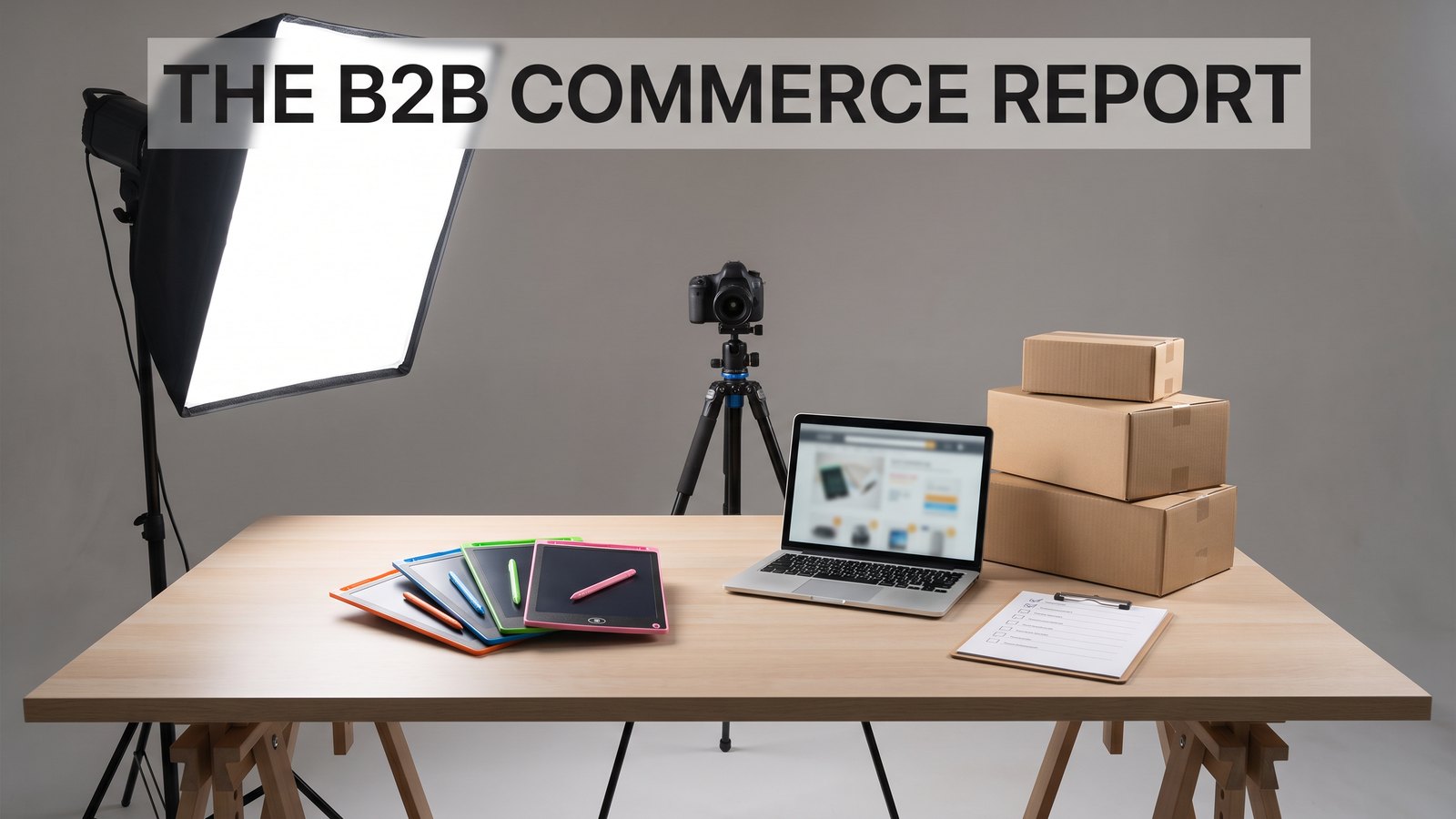
Good LCD writing tablet product photography is evidence, not decoration. Make real screen visibility legible without exaggerating contrast, line color, or brightness. Do not render a non-backlit writing board as a glowing computer display. If visibility varies by angle or ambient light, show an accurate use view rather than hiding it.
Shoot approved samples, retain high-resolution originals, and photograph every sellable color and size. The hero image needs a clean background and correct product proportions. Lifestyle photos should show a plausible setting—travel, waiting room, family activity, or desk note—without implying water resistance, impact resistance, unattended use, or a younger age than the approved grading supports.
Image plan
-
Purpose: identify the exact SKU. Placement: hero image and primary product feed. Caption: “10-inch LCD writing tablet with stylus and lock switch.” ALT: “Front view of a 10-inch black LCD writing tablet with stylus.” English AI prompt: “Clean high-resolution ecommerce product photograph of the approved 10-inch LCD writing tablet and stylus, front three-quarter view on pure white background, accurate matte plastic, real non-backlit LCD writing surface with a simple handwritten line, natural soft shadow, no props, no altered logos.”
-
Purpose: prove the write–lock–erase action. Placement: second or third gallery image and how-it-works block. Caption: “Write a note, lock it, then unlock and erase.” ALT: “Three-panel sequence showing writing, locked screen, and erased LCD writing tablet.” English AI prompt: “Three-panel instructional image using the approved LCD writing tablet: left hand writes a simple word, center shows the lock switch engaged with drawing retained, right shows the unlocked tablet after erase; neutral background, accurate controls, concise English labels only.”
-
Purpose: establish scale and components. Placement: gallery and specification section. Caption: “Check dimensions and included stylus before ordering.” ALT: “LCD writing tablet with measurements and supplied stylus.” English AI prompt: “Precise product specification infographic for the approved LCD writing tablet, stylus, and retail box; show only verified width, height, depth, and screen measurements from the specification, white background, clean technical callouts, no invented accessories.”
-
Purpose: set an honest use expectation. Placement: lifestyle gallery and parent-focused copy. Caption: “A reusable activity for quiet travel moments.” ALT: “School-age child using an LCD writing tablet beside an adult during travel.” English AI prompt: “Natural daytime lifestyle photograph of a school-age child, beside an adult, using the approved LCD writing tablet during car or train travel; product visible and proportionally accurate, normal ambient light, no screen glow, no unsafe behavior, no unconfirmed accessories.”
-
Purpose: prevent unboxing disputes. Placement: final gallery image and B2B sell sheet. Caption: “Tablet, insert, and retail package shown as supplied.” ALT: “Open retail box containing LCD writing tablet, stylus, instruction card, and protective packaging.” English AI prompt: “Top-down unboxing photograph of the approved LCD writing tablet retail package, showing only confirmed contents, protective tray or bag, instruction leaflet, and tablet; realistic packaging materials and artwork, crisp studio lighting, no fictional gifts or batteries.”
A short video can answer the core question faster than stills. In 15–30 seconds, show a hand writing, engaging the lock, unlocking, pressing erase, and the cleared result in one uninterrupted sequence. Add subtitles and a matching text explanation.
For a factory-approved image brief, sample checklist, or OEM/ODM asset package, email info@lcdwritingtablet.com.
Module 6: Educate customers before and after checkout
Customer education reduces contacts only when it is short, visible, and consistent. Put “What it is,” “What it is not,” “How to erase,” “How the lock works,” “What is included,” and battery information where relevant on the product page. Repeat the critical setup steps in the package insert and a post-purchase message.
A useful delivered-order message links to a three-check setup page: remove any battery isolation tab; unlock the screen before testing erase; and press erase after making a visible line. A compact diagnostic path can distinguish a setup problem from a fault: check film or stylus pressure if no line appears; check lock and battery status if it will not erase; report missing components or impact damage with the order number. Do not ask buyers to perform unauthorized repairs or open a compartment against the product instructions.
For EU destinations, plan local-language safety information during artwork approval. GPSR addresses online sales and marketplaces and emphasizes risk assessment, technical documentation, traceability, accessible safety information, and an EU-based responsible person where required. 6 Design the insert so it carries approved warnings, basic care, battery information where relevant, and a readable product or lot reference.
Review support tickets and reviews monthly by reason: expectation mismatch, lock/setup, battery, damaged on arrival, missing component, wrong variation, late delivery, and functional fault. If “will not erase” increases, investigate lock wording, battery tab instructions, and factory function tests. If “smaller than expected” rises, improve the scale image. This makes customer service an input to product improvement.
Module 7: Design LCD tablet ecommerce returns as a diagnostic system
A compliant, usable LCD tablet ecommerce returns process states how to cancel, start a return, receive a refund or replacement, and report a damaged or faulty item. It must also respect applicable consumer law and marketplace rules. Do not use a commercial warranty to suggest that statutory rights are limited.
UK guidance says online customers who notify cancellation within 14 days generally have another 14 days to return goods; sellers generally refund within 14 days of receiving the item back, subject to the stated rules. 4 EU rules require appropriate repair, replacement, or refund remedies when goods are faulty or not as advertised. 5 Set the localized policy and refund timing with qualified review before launch.
Triage each request with order number, variation, brief symptom, and reasonable supporting photo/video where appropriate. First check known setup points without blaming the customer: lock position, battery activation or condition, and selected variation. Then issue the appropriate remedy. A low-cost replacement may be more economical than a return, but automatic replacements can conceal a lot defect.
At the returns center, assign a specific disposition: unopened resellable, open-box functional, cosmetic damage, missing accessory, erase/screen fault, battery-related, transit damage, or expectation mismatch. Link the record to SKU, lot, carrier, and fulfillment site. If the same lot generates repeated symptoms, pause its shipment, quarantine inventory, compare inspection records, and investigate with the factory. Traceability makes that possible. US children’s products require visible, legible, permanently affixed tracking information on product and packaging where practicable, including identifying manufacturer/importer/private-label information, production location/date, and batch or run identification. 7
Module 8: Inspect quality at the factory and receiving dock
Agree an inspection plan before production: critical-to-quality points, sample method, defect categories, lighting conditions, approved cosmetic standard, and functional checks. Attach golden-sample photographs to the plan. The inspector must understand normal LCD display behavior as well as true failures, otherwise decisions will be inconsistent.
Inspect housing finish, screen response across the active area, erase success, lock-switch operation, stylus fit, battery-door security and markings, edges, logo position, labels, instruction insertion, barcode scans, retail-box closure, and carton marks. Sample from the beginning, middle, and end of production. If the design uses a button cell, give the compartment and retention feature additional scrutiny and confirm exact-market requirements.
Before final payment or departure, retain an inspection report with quantity inspected, defects by category, photographs, lot codes, carton count, and corrective actions. File it with the purchase order, approved artwork, specification, test reports, declarations where applicable, and shipping papers.
At receiving, sample cartons from different pallet or container positions. Check purchase-order match, crushing or moisture, correct variation mix, barcode readability, accessory count, basic write/erase/lock function, and lot code before inventory is commingled. Report discrepancies quickly while the factory and carrier evidence are clear.
Module 9: Engineer packaging and logistics for parcel reality
Packaging must sell, protect, identify, and travel. First map the route: factory to retailer DC, marketplace fulfillment center, or third-party logistics provider. A thin shelf box may need a protective mailer, tray, or outer carton for parcel delivery. The LCD surface needs scratch protection, the stylus must not migrate against the screen, and the tablet should not move inside the retail box.
Request unit-pack dimensions and weight, inner-pack quantity, master-carton dimensions, gross/net weight, board grade, pallet pattern, and shipping marks. Cartons should identify SKU, variation, count, lot, origin marking where required, and orientation. Put scannable unit and carton codes on flat, uncreased surfaces and validate them through the wrapping used by fulfillment.
Choose protection after assessing real drop and compression risk. Better tray fit, paper sleeves, thin protective films, dividers, and void control may prevent damage with less cube than excessive foam. Transit-test the final configuration for the intended route, and treat the tested package as part of the controlled specification.
Before selling into Germany, verify packaging duties. The ZSVR operates the LUCID Packaging Register and provides guidance on registration, system participation, packaging classification, and reporting for mail-order and online retailers. 8 In France, EPR-linked products and packaging may require Triman and waste-sorting information; confirm the current scope, placement, and artwork with a qualified France compliance resource before printing. 9 A box suitable for one market is not automatically suitable for all EU markets.
Choose Incoterm and importer-of-record arrangements deliberately. Build landed cost from unit price, tooling, tests, printing, packing, inspection, inland freight, international freight, duties/taxes, brokerage, fulfillment, damage reserve, returns, and marketplace fees. Confirm classification, tax, and import treatment with qualified customs and tax advisers rather than inferring it from an online listing.
Module 10: Budget for compliance, service, and truthful access
Work backwards from an achievable retail price through channel fee, payment fee, fulfillment, postage, advertising, expected returns, service cost, taxes where relevant, and desired margin. The result is the landed-cost ceiling for screen size, material, pack, and customization. Separate one-time costs—tooling, plate charges, translations, photography, tests, and first compliance review—from recurring tablet, battery where supplied, pack, assembly, inspection, and carton costs.
Compliance must be funded from the first quote. EU CE marking is mandatory only where harmonized rules require it; before affixing it, the manufacturer must identify applicable requirements, gather evidence, prepare technical documentation, and sign an EU declaration of conformity. The EU guidance says relevant documentation should be retained for at least 10 years after market placement. 2 Never copy a CE mark or declaration from a visually similar tablet.
RoHS restricts ten hazardous substances in electrical and electronic equipment, while WEEE supports separate collection and proper treatment of e-waste. 10 11 National producer registration and financing obligations, battery rules, radio functions, chargers, chemical restrictions, packaging EPR, and product labeling vary by configuration and market. Obtain model-specific, current professional advice for the US, UK, Germany, and France. Supplier reports are evidence to review, not a universal authorization to sell.
For EU online offers, align manufacturer identity, product/lot identification, relevant warnings, and EU responsible-person details where required across product, packaging, technical file, and listing. GPSR also strengthens marketplace accountability and rapid action where an unsafe product is identified. 6 Agree in writing who owns the technical file, holds reports, can access records, and responds to a platform or authority request.
Module 11: Launch, learn, and scale with control
Launch a controlled SKU in a defined market, then reconcile it before it goes live. Confirm that photos match the golden sample; titles, bullets, attributes, and dimensions match the specification; variation images are correct; contents match the pack; delivery claims match inventory; support can explain erase/lock/battery steps; and the return process works in the target market.
Monitor conversion, refund rate, return reason, review language, transit damage, dispatch delay, and support contacts by SKU, color, lot, channel, and fulfillment location. Fix the earliest cause: product design, package, image, listing, insert, fulfillment, or support. Do not rewrite the product promise in response to one review; act on repeated, categorized evidence.
Frequently asked questions
What should the page say about saving drawings?
Say it directly: “This LCD writing tablet does not save, upload, print, or transfer drawings,” if that is true. Keep memory or connected models as separate SKUs with their own evidence and imagery.
Is a children’s-looking tablet automatically a toy?
No. Intended use, design, packaging, marketing, and consumer perception all matter. CPSC notes that electronic devices can be children’s products if they are child-themed, child-sized, or marketed primarily to children. 1 Obtain qualified guidance for the exact item and market.
Which image prevents the most returns?
The how-it-works image or video usually prevents more avoidable returns than a lifestyle image. It must show real writing, lock position, erase action, dimensions, and included components without artificial screen effects.
Can one package cover all four target markets?
Only after market-by-market review. Language, warnings, responsible-operator information, recycling/EPR marks, battery requirements, and retail rules can differ. Germany and France deserve particular packaging review. 8 9
How should a claimed fault be handled?
Identify order and variation, help the buyer check documented basics such as lock and battery status, then provide the remedy required by the localized policy and law. Code the outcome and link it to lot and fulfillment data so recurring faults trigger investigation.
Conclusion
To sell LCD writing tablets online sustainably, make the listing an honest extension of the factory specification. Choose a clear use case, keep a golden sample, show real product behavior, teach lock-and-erase setup, publish limits beside benefits, and treat returns as quality data. This creates a stronger OEM/ODM program from Shenzhen production to repeatable ecommerce sales in the US, UK, Germany, and France.
For OEM/ODM samples, verified listing assets, and a market-specific quotation from LcdWritingTablet, email info@lcdwritingtablet.com.
References
Continue with the next sourcing decision.
Use these internal links to compare products, check common buyer questions, review compliance preparation, or send your requirements to the factory.
Turn this sourcing plan into a product brief.
Share your target market, product requirements, packaging preference and estimated volume for a practical OEM / ODM discussion.