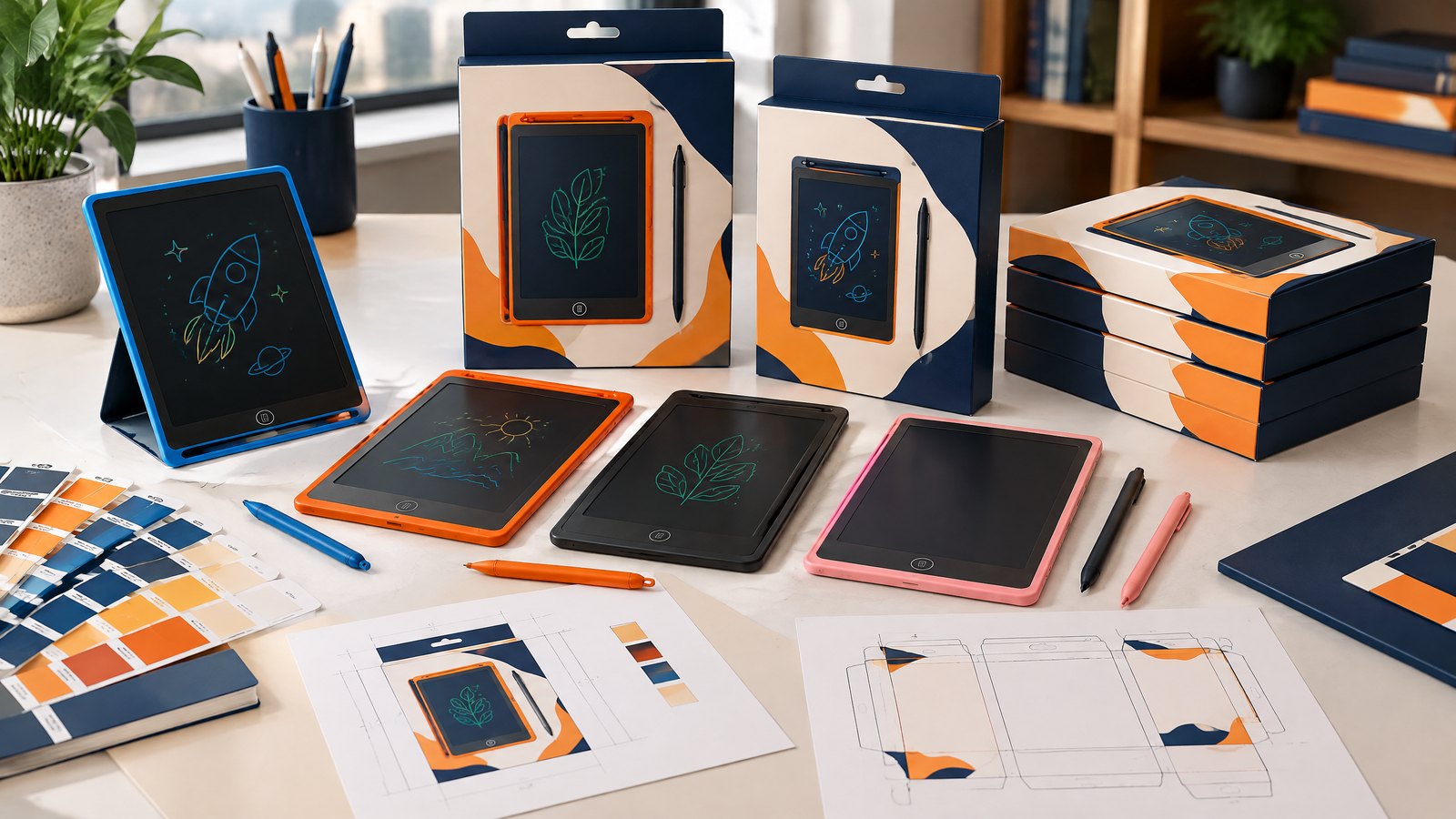
This guide provides a practical B2B decision framework. Final specifications, market obligations, testing scope, labels, packaging and shipment requirements must be confirmed for the exact finished SKU and destination.
LCD Writing Tablets for Hotels, Restaurants, and Family Attractions: Guest Activity Programs
1. Direct Answer: Buy for the Guest Moment, Not the Catalogue
An LCD writing tablet for hotels works best as a controlled guest-activity asset: a quiet, reusable writing surface for a check-in wait, a family meal, a rainy-day lounge, or an attraction trail. It should be simple to issue, clear, collect, clean under the venue’s own approved method, and return to a named storage location. Its value is not that it is electronic. Its value is that it gives a family something immediate to draw, play, plan, or observe without an account, Wi-Fi connection, charger, or guest-data workflow.
Buyers should start with one defined guest journey. A restaurant may want compact boards for host-stand waits; a resort may need numbered loan kits for a lobby or kids’ programme; a family attraction may use boards with a site-specific observation prompt. That choice determines the writing area, stylus retention, pack size, branding, activity insert, storage, and control of replaceable batteries.
The practical buying sequence is straightforward: define peak simultaneous use; trial the proposed configuration in the real venue; approve the exact board, pack, labels, and artwork; document inspection and shipment-release rules; then scale after a small operational pilot. Do not order against a generic product photo. Order against a controlled specification and an approved representative sample.
This guide is written for LcdWritingTablet, a Shenzhen OEM/ODM LCD writing tablet manufacturer serving B2B buyers in the US, UK, Germany, and France. It does not promise that every model, test document, feature, price, lead time, or market approval applies to every order. Product classification and obligations depend on the final design, battery, intended age, claims, sales route, and destination. Confirm the exact finished SKU before it is placed on a market.
2. Buyer Context: Design the Program Before the Product
Hospitality operators usually purchase shared assets, not a personal device for one owner. The board will move from storage to staff, guest, collection point, cleaning procedure, and storage again. A good-looking sample is not enough if staff cannot see where it belongs, styluses are repeatedly lost, or a busy shift requires unpacking and recounting loose items.
Write the programme in one sentence before asking for quotations: “Families waiting to be seated borrow a board with a menu puzzle and return it to the host stand,” or “Visitors receive a wildlife-observation board at entry and return it at exit.” This sentence makes the operational questions visible: who issues it, how many are needed at once, how it returns, what happens when it is damaged, and whether a guest keeps it.
Map ownership and peak demand
Count boards needed at the busiest moment, rather than annual guest volume. Then add only the replacement allowance justified by the venue’s own loss experience. Map the route from store room to issue point, guest use, collection, inspection/wipe station, and secure storage. Give each handoff an owner and decide whether the board is an in-room amenity, a loan item, a supervised activity tool, or a retail kit.
A reusable drawing tablet hospitality program needs a tray, identifier, and count routine when boards are loaned out. A giveaway needs individual presentation and a clear take-home policy. A multi-site brand can often standardise the tablet while varying the local activity card. That keeps replenishment simple without making every guest experience identical.
3. Product and Use-Case Explanation: Where LCD Boards Fit
An LCD writing tablet is a short-lived drawing and writing surface. A guest uses a stylus—or, on some designs, a fingertip—to make marks and clears the surface electronically. Models can differ in size, contrast, lock/erase control, stylus arrangement, housing, and battery arrangement. It is not a connected learning platform, permanent record, childcare supervision tool, safety device, or substitute for accessible visitor information.
Its hospitality role is a low-friction prompt. Guests can sketch an exhibit, play a word game, plan a route, tally colours, choose a story ending, practise a word, or play noughts and crosses. If a response needs to be retained, the operator or guest needs a separate approved method before the board is cleared.
Hotels and resorts
Use boards at reception, in a family lounge, in a welcome pack, or during a supervised kids’ activity. A compact board suits check-in and restaurant use; a larger writing area can suit a lounge or trail prompt. For example, a hotel can keep numbered boards in a closed concierge tray with a “draw your day” card. At each shift change, the desk counts the tray. This is not a request for “premium entertainment”; it is a specific requirement for size, housing, stylus method, insert, tray-compatible pack count, and asset ID.
Restaurants
A kids activity tablet for restaurants should help the seating and dining flow rather than create work for servers. It may be offered at the host stand, paired with a children’s menu puzzle, or held at a shared activity station. Test it on actual table surfaces and under the venue’s lighting. Confirm that a child understands the clear action, the board does not slide excessively on trays, and staff can count the stylus quickly.
Do not make unsupported “food safe” or “dishwasher safe” claims. The operator should establish its own hygiene procedure, assess compatibility of its intended cleaning materials with a representative sample, and return the board to service only when dry and checked.
Family attractions
A family attraction activity board can turn queue time, wayfinding, and observation into participation. A prompt may ask guests to spot shapes, sketch an animal, solve a venue clue, predict an outcome, or draw a favourite exhibit. It should supplement the visit, not replace safety signage or staff direction.
Decide whether the board returns at exit, returns at an activity counter, or becomes a retail kit. A returnable item may use bulk inner packs, visible identifiers, and collection trays. A retail kit needs a different pack, barcode, labels, and end-of-life plan. Do not repurpose one route for another without reviewing the final product and pack requirements.
4. Specification and Decision Framework: Freeze the Useful Details
The most useful specification is observable. Request a drawing or sample that reflects the quoted configuration—not a similar retail model. Record the board and effective writing-area dimensions separately; housing colour and finish; display contrast in the venue’s normal light; stylus and retention method; clear/lock behaviour; battery type and compartment; logo placement; pack contents; inserts; labels; and master-carton marks.
Key choices to test on site
Writing area and contrast. Select the size for the task and physical location. Test legibility in a warm restaurant, daylight lobby, shaded outdoor area, or kids’ room rather than relying on studio photography.
Housing and cleaning exposure. Define colour, print, edges, moulding tolerance, and appearance expectations. Tell the factory which cleaning approach the venue expects to use, ask for material-compatibility input, and complete an operator sample trial. A generic claim should not replace a site-specific check.
Stylus, erase, and lock. A tether can reduce loss but may tangle; a slot is simple but needs counting; a separate stylus may suit a retail kit. Decide whether an erase lock is needed and test it with the intended guest group. Plan replacement styluses as identified parts if the programme will need them.
Battery arrangement. Confirm chemistry, battery reference, whether it is included, compartment access, fastener, warnings, instructions, and the party authorised to replace it. Finalise this before pack artwork, test planning, and freight documents. A battery-powered configuration is not a generic accessory choice.
Branding and language. Use controlled artwork for logos, product marks, activity content, barcodes, and carton labels. For the UK, Germany, and France, determine required warnings and instructions with the responsible market operator. Promotional copy is not a replacement for required product information.
Score configurations by operational importance
Create a short weighted matrix. A restaurant may weight compact storage, stylus control, cleaning compatibility, and quick issue highest. An attraction may weight prompt visibility, pack count, identifier placement, and queue flow. Compare only configurations with the same scope of supply. Keep a note of rejected options; it helps stop later reorders from drifting to a board that did not fit the host stand or activity kit.
5. Procurement Process Guidance: From RFQ to Rollout
Send a comparable RFQ to each supplier. Include destination and sales route; venue use; intended age positioning; quantity bands; dimensions; colours; branding; stylus and battery arrangement; desired pack contents; language/artwork status; individual or bulk packing; carton marks; preferred Incoterm and named place; requested evidence; and decision date. Ask suppliers to state assumptions and exclusions instead of providing an unqualified headline price.
If LcdWritingTablet is under review as an LCD writing tablet amenity supplier, the quotation should point to a configuration sheet, not merely a model name. The buyer should be able to reconcile the product, commercial sample, packaging proof, and quote.
Approve a production reference, not just a concept sample
A commercial sample helps staff judge fit and flow. The approved production reference, often called a golden sample, should show the final board, stylus, accessory set, labels, instructions, artwork, inner pack, and carton marks. Photograph it or retain it, then reference its revision and approval date in the purchase order.
For example, a hotel may approve a white housing, dark logo, slotted stylus, two-language insert, and fixed quantity per inner box. Before mass production, it reviews a pre-production sample and digital packaging proof for that combination. It checks colour, text, legal-mark location, board count, stylus fit, and clear/lock function. A generic sample with a different colour or packaging does not close those decisions.
Attach an order-control pack
The PO should attach or clearly reference the final specification, artwork revision, pack-content schedule, approved sample, inspection plan, defect definitions or acceptance criteria, language and label instructions, required documents, carton layout, shipping marks, Incoterm with named place, and nonconforming-goods process. Include change control: no material, component, battery, housing, packaging, or print change without written approval. Evidence associated with one configuration does not automatically cover a changed configuration.
Planning a branded guest activity program or multi-site pilot? Email info@lcdwritingtablet.com with the venue type, destination, peak use, preferred configuration, pack format, and artwork status.
Before goods depart, assign the receiver, storage point, distribution plan, asset-ID method, staff briefing, cleaning process, damaged-goods route, and battery-control procedure. A technically correct purchase order still fails if a property has no place to sort or count arriving cartons.
6. Quality and Receiving Controls: Inspect the Released Configuration
Build quality control around venue use, not factory photographs. The buyer should state what is measured, who performs the check, what evidence is supplied, and who can release the shipment. An independent inspection can be appropriate where customisation, order value, or internal policy makes post-export rework costly.
Pre-shipment checks
A tailored inspection may confirm the approved sample reference, model, colour, logo legibility, writing response, clear and lock function, stylus presence and fit, housing/edge appearance, battery-cover condition, labels, inserts, barcode scan where requested, pack count, carton count, and carton condition. It does not replace any required safety or conformity assessment.
A practical factory example is a lot check that verifies the approved version first, function-tests sampled boards, examines the specified battery compartment, reconciles inner-pack quantities with the packing list, and photographs carton marks plus pass/fail findings. This is more useful than an unsupported statement that goods are “good quality.” The parties should agree sampling method, defect categories, remediation, repeat-inspection responsibility, and shipment release before production. Do not use arbitrary acceptance rates copied from another product.
Receiving controls
Before site distribution, compare carton count and marks with the PO and packing list. Record crushing, water exposure, seal damage, shortages, mixed SKUs, or incorrect marks with photographs. Open a representative selection by carton group; check the pack count, basic function, stylus, artwork revision, instructions, and required warnings. Log lot or asset identifiers where used and quarantine suspect goods.
For a three-site attraction delivery, the receiver can verify each location code, sample each carton group, and confirm the approved activity insert before allocating stock. That simple control prevents one location receiving another location’s language pack or trail content.
7. Cost, Packaging, and Logistics: Compare Landed, Usable Cost
Compare the cost of putting a ready-to-use board into the intended guest programme: product and approved contents, customisation, inspection, freight, destination charges, receiving work, storage, site allocation, and approved spares. Put exclusions beside every quote. A lower unit price can omit artwork, labels, cartons, inspection, import costs, or the work needed to make stock usable.
Packaging choices and shipment data
A children activity tablet bulk order with returnable stock may use bulk inner packs to reduce individual-box waste and speed issue. Retail, room-delivery, and take-home programmes may justify individual presentation, but need barcode, label, storage, and disposal planning. The pack-content schedule should state boards, styluses, inserts, labels, inner packs, and master cartons exactly.
Confirm master-carton dimensions, gross/net weight, units per carton, stack limits if applicable, palletisation assumptions, and marks before selecting freight. For an LCD tablet guest entertainment shipment, cubic volume and pack protection can be as important as product weight. Agree the Incoterm with a named place and clarify handover, main carriage, insurance, export/import formalities, duty/tax, delivery appointment, unloading, and damage claims. Obtain transaction-specific customs and freight advice.
Allow time for sample sign-off, artwork proofing, production, inspection, carrier booking, transit, clearance, receiving, and site distribution. Do not use a generic lead-time promise; final configuration, capacity, route, and approval timing control each order.
8. Compliance Caveats for the US, UK, Germany, and France
Compliance is tied to the exact final product and route, not a logo added late in production. The responsible manufacturer, brand owner, importer, distributor, and seller should determine product classification, intended age, applicable rules, labels, instructions, documentation, environmental duties, and economic-operator roles. The following are procurement prompts, not legal advice or a compliance declaration.
United States
If a board is designed, manufactured, or marketed as a plaything for children under 14, U.S. toy requirements may apply. CPSC says ASTM F963 is mandatory for children’s toys and that firms must identify the sections applicable to the specific product; applicable children’s products can require certification. 1
Battery choice requires early review. CPSC’s Reese’s Law guidance addresses consumer products that contain or are designed to use button cell or coin batteries, covering such matters as secure compartments, use-and-abuse resistance, warnings, instructions, and certification. It also distinguishes toy products meeting the applicable toy battery provisions. 2 Do not assume that a screw, a generic report, or a previous model answers the assessment for the final battery compartment, labels, and instructions.
United Kingdom
For a product within the toy definition, Great Britain’s Toys (Safety) Regulations 2011 apply to toys designed or intended for play by children under 14. Government guidance describes safety assessment, conformity assessment, documentation, identification, and appropriate warning/instruction duties. It also explains that CE marking is recognised indefinitely in Great Britain while EU/NI routes differ. 3
This guide does not determine whether a particular guest board is a toy. Review final claims, marketing, age targeting, instructions, electrical/battery features, and supply route with qualified advisers. Packaging also needs a responsible owner: UK guidance says businesses must assess whether their activities and thresholds make them packaging producers under EPR. 4
Germany and France
Germany and France are EU markets. The General Product Safety Regulation has applied to consumer products since 13 December 2024 and requires a responsible economic operator in the EU for each covered product, alongside strengthened lifecycle risk assessment. 5 Where harmonised rules require CE marking, the manufacturer must identify relevant requirements, gather technical evidence, and issue an EU declaration of conformity. CE is not a certificate issued by a central EU body and must not be used where no relevant rule requires it. 6
Electrical/electronic equipment can have environmental obligations. The Commission says RoHS restricts ten substances in EEE, subject to scope and exclusions. 7 EU WEEE responsibilities can include country-by-country registration, reporting, financing/organising collection and treatment, and take-back obligations; confirm the exact national role and route. 8 Boards with batteries should also be reviewed under Regulation (EU) 2023/1542, which has phased application and provisions concerning portable batteries, including removability/replaceability and derogations. 9 Arrange appropriate local-language consumer information and warnings for Germany and France; English-only artwork may be inadequate.
9. Practical Hospitality Program Table
| Decision | Hotel or resort | Restaurant | Family attraction | Evidence to retain |
|---|---|---|---|---|
| Guest moment | Lobby wait or lounge prompt | Host-stand or table wait | Entry queue or trail | One-sentence programme brief |
| Ownership | Concierge loan or amenity | Table loan or shared station | Returnable kit or retail kit | Issue/return process and owner |
| Configuration | Compact or lounge-size board | Compact, stable format | Space for clues or sketches | Approved sample/specification |
| Accessory control | Numbered tray, spare plan | Caddy or host-desk count | Kit ID and collection point | Pack-content schedule |
| Content | Welcome drawing card | Menu puzzle/story prompt | Observation challenge | Controlled artwork/language proof |
| Release and receipt | Functional/pack check | Print, stylus, clear check | Site-code and insert check | Inspection report and receiving log |
10. FAQ: Questions Hospitality Buyers Ask
Are boards suitable for every age group?
No. Suitability depends on the final product, age positioning, intended and foreseeable use, supervision, small-part and battery considerations, and applicable requirements. Do not use universal age claims. Define users and have the responsible compliance party assess the final SKU and guest-facing information.
Should we give them away or lend them?
Choose the model that fits operations. A giveaway needs a take-home policy and individual presentation. A loan model needs a collection point, storage, count, cleaning process, loss plan, and replacement route. Compare staff burden and usable programme cost, not only board price.
What should a first sample include?
Request the proposed board size, display, housing colour/finish, stylus solution, clear/lock behaviour, battery configuration, logo position, insert concept, and intended pack. State the destination and marketing use. For final approval, request the exact production configuration, not a visually similar stock item.
Can private-label branding and activity content be added?
OEM/ODM feasibility depends on the model, print method, artwork, quantity, cost, and timing. Use controlled artwork, approve a proof, and keep required marks and warnings unobscured. Review activity content for local language, accessibility, and required product information.
How should returnable boards be cleaned?
Use an operator-approved procedure and test it on a representative sample. Confirm the planned materials do not damage the display, housing, logo, labels, or stylus. Follow the venue’s hygiene rules; do not represent a board as a food-contact article unless the exact claim is supported.
Is third-party inspection necessary?
It depends on order risk and internal controls. It can be valuable when branded, destination-specific stock is difficult to rework after export. Whether done by the buyer, factory, or an external provider, it should follow the approved sample and a written release decision.
What records should be retained?
Keep the RFQ, specification, sample approvals, quote, PO, controlled artwork, pack schedule, inspection record, packing list, shipping documents, receiving log, and change/defect correspondence. Maintain compliance documents for the final market route and agree who holds them before launch.
11. Conclusion: Pilot the Routine, Then Scale It
The strongest guest activity programme is deliberately simple: one defined family moment, a board configuration that works there, a clear staff handoff, and a controlled route back to storage. Test real lighting, handling, cleaning exposure, and counting before committing to a multi-site order. Then retain the sample, inspection, shipment, and receiving evidence for the exact version purchased.
For a hospitality-focused configuration discussion or quotation, email info@lcdwritingtablet.com with the target market, venue type, quantity range, board size, branding, pack format, and delivery destination.
Image Plan
-
Purpose: Establish the hotel use case. Placement: After Module 1. Caption: “A reusable LCD writing tablet supports a quiet family activity during a hotel lobby wait.” ALT text: “Family using an LCD writing tablet in a hotel lobby.” English AI prompt: “Realistic editorial commercial photograph, diverse family with two children in a modern upscale hotel lobby, child drawing on a slim LCD writing tablet with stylus, warm natural light, no logos, landscape.”
-
Purpose: Show a controlled restaurant issue point. Placement: Restaurants subsection. Caption: “A numbered tray helps staff issue and collect children’s activity tablets consistently.” ALT text: “Numbered tray of LCD writing tablets at a restaurant host stand.” English AI prompt: “Realistic B2B hospitality operations photograph, contemporary family restaurant host stand, neat numbered tray holding compact LCD writing tablets and styluses with a small activity card, no trademarks, horizontal.”
-
Purpose: Visualise attraction programming. Placement: Family-attractions subsection. Caption: “A site-specific prompt turns the tablet into a family trail activity.” ALT text: “Child sketching an animal observation on an LCD writing tablet.” English AI prompt: “Candid realistic family attraction scene, child with adult guardian at a shaded zoo exhibit, sketching an animal observation on a reusable LCD writing tablet beside a discreet trail card, no logos, landscape.”
-
Purpose: Support the procurement-control message. Placement: Module 6. Caption: “Functional checks, packaging verification, and carton marks should be reviewed before shipment release.” ALT text: “Quality inspector checking LCD writing tablets and carton labels.” English AI prompt: “Professional electronics factory quality-control scene, inspector checking LCD writing tablet function beside approved sample, packaging inserts and labelled master carton, realistic documentation clipboard, neutral light, no logos, wide landscape.”
References
Continue with the next sourcing decision.
Use these internal links to compare products, check common buyer questions, review compliance preparation, or send your requirements to the factory.
Turn this sourcing plan into a product brief.
Share your target market, product requirements, packaging preference and estimated volume for a practical OEM / ODM discussion.